As I write my final blog for this course, I’m struck by the word connectedness. In Digital Reading: What’s Essential in Grades 3-8 there is an entire section of the book dedicated to the word connectedness. There is something powerful about feeling like you are part of a community and connected to people in a variety of ways.
Technology isn’t about the latest high tech gadget or mastering the latest software, its about people connecting their thoughts and ideas with the thoughts and ideas of others. Technology in the classroom affords several opportunities for students to connect with their peers beyond the walls of our classroom.
Beyond the walls of our classroom also takes on a new meaning with the use of technology. It can be as simple as connecting to another classroom in another city, state or country, but it can also be giving the students within our own classrooms opportunities to work with each other in a different setting.
Virtual settings are comfortable places for teenagers to interact with their peers. Teenagers are sometimes embarrassed or too shy to talk to face to face with a peer they don’t know, but in a virtual space they flourish. Whether students are using Google documents to peer edit another student’s work without the pressures of giving direct feedback to the peer face to face or using Flipgrid to express their ideas, technology platforms provide spaces where students have time and opportunity to connect.
The ability to pause a video and rewind it for a second view provides students with opportunities for a better understanding of the underlying content. Technology creates a new space for interaction with content and collaboration with peers.
Creating spaces and opportunities for students to have an open dialogue with their peers in several different ways is the best way to create a sense of connectedness that is both timely and personal.
It’s not the technology itself that is so important, but the way in which technology is used to create a community where students are free to collaborate and connect with each other in ways that are different from their everyday face to face conversations.
Technology provides the access and space for collaboration and connection which ultimately provides a sense of connectedness.
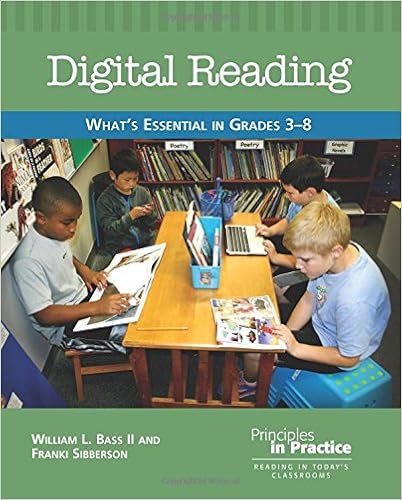 The start of this book discusses the importance of having students read across texts to help them engage in reading with motivation. They also classify digital reading into two parts: what it is and what it is not. They claim that helping students use the tools for digital reading with purpose will bridge the gap between student reading at home and at school. They propose that the most important years to structure this type of reading is in grades 3-8.

